A buyer sees a polished Dubai apartment, villa, lobby, or restaurant feature and starts a quiet decision loop: save the studio, request a proposal, or keep looking. The safer answer is to treat the press mention as a lead, then verify what the article proves before the studio reaches the shortlist.
A Dubai design press feature is a starting signal, not a shortlist decision
A Dubai design press feature can show market visibility, completed work, and editorial interest, but it should not be treated as proof of capability on its own. For UAE readers, the useful question is whether the article’s claims can be matched to disclosures, licences, project evidence, and the reader’s own scope.
A polished project profile can arrive at the right moment: a villa owner sees a calm majlis, a procurement lead notices an office fit-out, or a hotel operator saves images of a lobby with the right tone. The mistake is not admiring the feature. The mistake is moving from admiration to appointment before checking what the feature actually proves.
What question should the reader ask before trusting a design press feature?
The first question is: what decision am I using this press feature to support? A feature used for inspiration needs less proof than a feature used to place a studio on a paid proposal list. A private apartment renovation, villa refurbishment, office fit-out, hospitality project, retail unit, or developer-led common-area upgrade will each require different evidence.
- At inspiration stage: save the article, but treat the images as references rather than evidence of delivery capacity.
- At first-shortlist stage: check whether the studio’s claimed service matches the project type, budget band, location, and approval burden.
- At RFP stage: request licence details, comparable project records, team roles, insurance position, and a clear scope split between design, procurement, project management, and fit-out.
- At negotiation stage: test contract terms, deliverables, authority responsibilities, programme assumptions, and variation control.
- At final appointment: rely on verified documents and references, not the article headline.
Dubai buyers should also identify the format of the press feature before giving it weight. An editor-written project profile, awards listing, studio-supplied case study, sponsored article, advertorial, partner post, and influencer-style home tour are not the same signal. UAE media regulation also treats advertising and media content on digital platforms as a regulated activity in defined cases. For example, the National Media Authority describes an individual advertising permit service whose stated delivery time is three working days, with the first three years free and a fee after that period, for the conditions described on the authority’s service page: National Media Authority advertising permit service.
What does a press mention prove and what does it not prove?
A press mention proves that the studio, project, founder, or design concept reached a publisher, platform, awards body, or content partner. A press mention may also show a studio’s visual language, positioning, photography standards, and ability to communicate a project story. Those are useful buyer signals, but they are not contractual proof.
- “Award-winning” should be matched to the award name, category, year, judging basis, and whether the cited work resembles the buyer’s project.
- “Luxury” should be tested through specifications, workmanship, procurement routes, aftercare, and client references, not adjectives.
- “Turnkey” should be clarified as design-only, design and procurement, project management, fit-out contracting, or a managed network of separate contractors.
- “Sustainable” should lead to material schedules, lighting choices, ventilation logic, durability decisions, and measurable performance claims.
- “Dubai-based” should be checked against the studio’s current trade licence, issuing authority, licensed activities, and legal contracting entity.
The practical rule is simple: use the press feature to decide whether a studio deserves further checking, not whether the studio deserves the job. The next check is the most revealing one: whether the feature is editorial, sponsored, or partner content.
How can a reader tell whether a Dubai design feature is editorial, sponsored, or partner content?
A reader should identify the content type first because editorial coverage, sponsored posts, award listings, and partner features carry different levels of independence. In the UAE media context, the practical checks are labelling, author attribution, publication policy, brand involvement, and whether the studio paid, supplied, or approved the article.
What disclosure labels should readers look for in a design publication?
A disclosure label is the first risk marker. Design publications may use different wording for commercial content, so the reader should scan the headline area, byline, image captions, footer note, and social post that promoted the article.
- Lower-risk wording: “editorial,” “reported by,” “interview by,” or a named section with a clear journalist byline. This does not prove independence, but it gives the reader a place to test accountability.
- Commercial wording: “sponsored,” “paid partnership,” “advertorial,” “brand content,” “partner content,” “promoted,” “in collaboration with,” or “presented by.” Treat the article as visibility, not endorsement.
- Portfolio wording: “project submitted by,” “studio profile,” “case study,” or “press release.” This often means the studio supplied much of the information.
- Award wording: “shortlisted,” “winner,” “nominee,” or “featured in association with.” Ask who judged the award, what category applied, and whether entry fees or sponsorship affected placement.
The UAE’s National Media Authority describes an advertising permit service for individuals who publish advertising or media content through social media accounts, websites, or other modern digital platforms, whether compensated or unpaid. The same service page says applicants must provide identity and business documents, and that advertising content published by permit holders must comply with media content standards and related training requirements. See the National Media Authority’s advertising and media content permit service. For a buyer, the takeaway is simple: promotional design content is regulated communication, not casual praise.
Does a named editor or journalist make the feature more reliable?
A named editor or journalist improves traceability, but it does not settle the question. A reliable feature usually shows who wrote it, who photographed it, who was interviewed, and which facts came from the studio, client, contractor, or publication.
Reader-side checks should be practical. Open the byline. Look for a masthead, contributor profile, or editorial policy. Compare the article’s language with the studio’s website and social captions. If the phrases are identical, the feature may still be useful, but the independence level is lower. If the article includes a client quote, contractor attribution, product credits, and project constraints, the evidence base is stronger than a feature built only around adjectives and polished rooms.
Author attribution also helps procurement teams ask sharper questions. Instead of saying, “We saw your press,” ask, “Was this an independent editorial visit, a studio-submitted project, a paid partnership, or an award entry?” A credible studio should answer plainly. Evasion at this stage is a signal to slow the shortlist process.
When is a press feature still useful even if it is sponsored?
A sponsored feature can still be useful if the buyer treats it as a directory entry with photographs, not as proof of competence. Commercial content can reveal the studio’s positioning, preferred client type, visual language, and claimed scope. The test is whether the claims can be verified outside the article.
- Ask for the project location at district or building type level, while respecting client privacy.
- Ask for the completion period and whether the project is built, staged, rendered, or partially completed.
- Ask which services the studio actually delivered: concept, detailed design, procurement, site supervision, styling, fit-out, or project management.
- Ask who else worked on the project, including architect, contractor, MEP consultant, joinery supplier, lighting designer, or photographer.
- Ask whether images show the final handover condition or a styled shoot.
The risk question is not “Was this paid?” The better question is “Can each useful claim survive a document check, reference check, and brief-specific conversation?” Once the content type is clear, the next step is to test whether the project evidence matches the claims in the Dubai design press article.
What project evidence should match the claims in a Dubai design press article?
A credible design feature should connect claims to evidence that a buyer can verify before shortlisting. For Dubai interiors, architecture-adjacent work, or fit-out projects, the strongest evidence usually includes completed project imagery, scope boundaries, client type, project date, permissions context, team roles, and named collaborators.
Which portfolio details should be verified before a studio is shortlisted?
A press feature often shows the most photogenic part of a project, not the full delivery record. A buyer should ask the studio to translate the article into a portfolio entry that can be checked against the proposed brief.
- Project identity: project name, or an anonymised reference if the client requires privacy.
- Location and asset type: apartment, villa, high-rise unit, hospitality venue, retail unit, office, clinic, or other commercial fit-out.
- Completion status: concept only, design development, tender package, built work, photographed work, or occupied space.
- Studio scope: interior design, architecture coordination, authority submission support, procurement, styling, project management, or turnkey delivery.
- Date and relevance: completion year, renovation age, and whether the same team still works at the studio.
- Budget band: only if the studio and client can disclose it, but enough to show whether the project resembles the buyer’s scale.
- Permissions context: landlord, developer, building management, Dubai Municipality, Dubai Civil Defence, or other authority involvement where relevant.
- Delivery partners: fit-out contractor, joinery workshop, lighting consultant, MEP engineer, kitchen supplier, furniture suppliers, and photographer.
The best evidence format is not one item. A serious shortlist file can include a portfolio deck, a site visit where access is possible, a client reference, a contractor reference, and completion or handover documents where the project type creates those records.
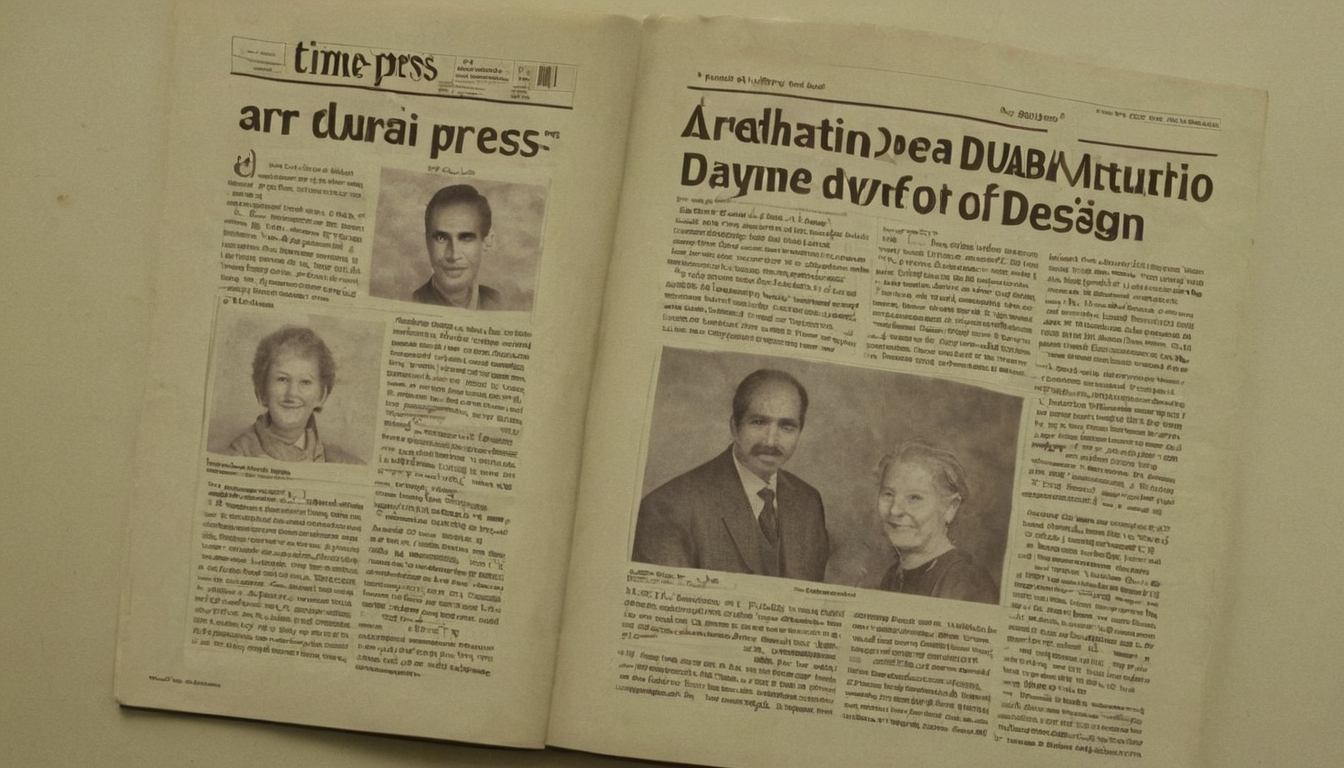
What project evidence should match the claims in a Dubai design press article shown with practical context cues.
How should readers evaluate good design beyond photographs?
Good design should survive the move from camera angle to daily use. A marble counter, curved sofa, or double-height lobby can photograph well and still fail the brief if maintenance is difficult, lighting is uncomfortable, acoustics are poor, or circulation does not suit the people using the space.
Readers should ask the studio to explain the operational choices behind the images. In a home, that means storage, cleaning access, privacy, child safety, moisture control, lighting scenes, and material durability. In hospitality, retail, and workplace projects, that means guest flow, staff movement, service access, acoustic comfort, fire and life-safety coordination, and the handover condition expected by the operator or landlord.
Lighting claims need particular care because “warm,” “luxury,” and “energy-efficient” are not the same thing. For applicable bulbs and fixtures, ENERGY STAR states that qualified LED lighting uses at least 75 percent less energy and lasts up to 25 times longer than incandescent lighting. A Dubai buyer should still ask for the lighting schedule, control intent, colour temperature range, and maintenance plan rather than treating a photograph of a glowing ceiling as performance evidence.
What passive design decisions should a press feature mention if performance is being claimed?
Performance language should come with design reasoning. If a Dubai design article claims comfort, efficiency, daylight quality, or climate responsiveness, the feature or follow-up portfolio should mention decisions such as shading, glare control, glazing treatment, orientation, daylight depth, thermal gain, material heat behaviour, and ventilation strategy where that strategy applies.
A buyer does not need a full engineering report before shortlisting, but the studio should be able to separate styling from performance. “Bright and airy” may describe a mood. “Reduced glare at west-facing glazing through shading and controlled artificial lighting” describes a decision that can be tested.
The same distinction applies to built status. A rendered villa majlis, a concept restaurant, and an occupied hotel suite are different forms of evidence. Before the shortlist moves forward, the next check is whether the studio is licensed for the service that the press feature appears to promise.
How should a reader verify that a Dubai design studio is licensed for the claimed service?
Before shortlisting a Dubai studio, the reader should verify that the business exists, is currently licensed, and has activities aligned with the service being offered. This matters most when a press feature describes turnkey delivery, fit-out, architectural coordination, procurement, or regulated building modification work rather than styling alone.
What licence details should the reader request from a Dubai design studio?
A licence check should match the press claim to the legal capacity of the business. A studio praised for “soft minimalism” may only need to prove design consultancy and procurement capability. A studio claiming full villa renovation, restaurant fit-out, ceiling changes, MEP coordination, or authority submissions needs a wider verification trail.
The buyer should request a current licence copy before the first proposal stage, not after fee negotiation. The document should be checked against the issuing authority’s official channel, such as Dubai Department of Economy and Tourism for mainland entities or the relevant Dubai free zone authority for free zone entities. If the studio uses a separate fit-out contractor, engineering consultant, architect, or procurement company, each entity should be named.
- Legal name and trade name: confirm that the company named in the press feature is the same company that will contract with the buyer.
- Licence number and issuing authority: check whether the licence is mainland Dubai, a Dubai free zone, or another emirate.
- Expiry date: reject expired documents unless the studio supplies proof of renewal from the issuing authority.
- Licensed activities: look for activities that match the offer, such as interior design, interior decoration, fit-out contracting, engineering consultancy, architecture, project management, furniture trading, or procurement.
- Branch or group status: confirm which legal entity carries liability if a press-featured “studio group” has several arms.
- Project role: ask whether the studio designs only, supplies furniture, manages contractors, signs authority drawings, or delivers works through licensed partners.
A free zone company may be suitable for design consultancy, procurement, or project management, but the buyer should ask how that entity handles mainland site work, contracting, invoicing, and any activity outside its licence scope. The answer should name the licensed partner, not rely on “we handle everything” as a substitute for evidence.
Media status also needs separation from service status. The National Media Authority describes an electronic process for its individual advertising and media content permit that includes logging into the system, selecting the service, uploading documents, submitting the application, checking approval or rejection, then fee payment. That process, described by the National Media Authority, concerns advertising or media content permissions, not a design studio’s authority to perform fit-out, engineering, or procurement work.
When does press-featured design work require technical or authority verification?
Technical verification becomes necessary when the featured work moves from surface design into building performance, safety, structure, common services, or regulated community rules. A beautiful photograph of a removed wall, concealed door, raised platform, spa bathroom, show kitchen, or dramatic ceiling should prompt a practical question: who approved the change?
Dubai projects may require landlord consent, developer or owners association approval, building management no-objection letters, contractor access permits, and authority review depending on the property type and scope. Dubai Municipality, Dubai Civil Defence, utilities providers, community managers, and building operators can become relevant where works affect structure, fire strategy, drainage, ventilation, electrical load, gas, façade elements, common areas, or high-rise services.
High-rise apartments need special care because a design decision that looks private can affect shared systems. Core drilling, slab penetrations, riser changes, fire-rated doors, sprinkler layouts, smoke detection, kitchen exhaust, wet-area relocation, and heavy stone installations should not be treated as styling choices. For a related planning lens, see Tylers’ guide to Dubai high-rise modification approvals.
The practical test is simple: if the press feature implies delivery beyond decoration, ask for the licence, the named technical parties, and the likely approval path before the studio reaches the shortlist. Once legal capacity is clear, the next question is whether the studio actually fits the buyer’s brief, budget, timeline, and operating constraints.
How should a buyer test whether a press-featured studio fits the project brief?
A buyer should test fit by comparing the studio’s published work with the actual project brief, procurement route, budget tolerance, decision timeline, and service depth. A studio featured for a luxury villa may not be the right match for a fast office fit-out, apartment refresh, or hospitality rollout in Dubai.
What should the first shortlist call confirm?
The first call should qualify the studio before the buyer asks for a full proposal. Private residential clients often care about taste, privacy, materials, and day-to-day coordination. Landlords and developers usually need repeatability, leasing appeal, and handover discipline. Retail operators, hospitality operators, and corporate tenants often need programme control, brand consistency, operational uptime, and clear site responsibilities.
Use a short script:
- “Have you delivered this type of Dubai project before, and can you show comparable built work rather than only renders?”
- “Which scope are you proposing: concept design, detailed design, procurement support, site supervision, turnkey delivery, styling, furniture selection, or a mix?”
- “Who will manage authority, landlord, developer, building management, or mall approvals if the site requires them?”
- “Can you work within our budget band and programme before preparing a paid proposal?”
- “Who signs decisions on our side, and who will lead the work on your side after appointment?”
- “Will your proposal separate design fees, procurement support, contractor coordination, site visits, reimbursables, and any purchasing margins?”
The buyer should then request a light evidence pack: company profile, relevant licence details, comparable case studies, named team roles, outline programme, fee structure, exclusions, assumptions, and sample deliverables. Early red flags include vague deliverables, refusal to provide licence information, no written proposal, and reluctance to separate design advice from procurement income.
How is choosing a design studio different from choosing a graphic designer?
A graphic design process can often be judged through briefs, drafts, revisions, files, and brand consistency. Interior design and fit-out decisions touch a physical site: survey accuracy, access, services, materials, contractor pricing, procurement lead times, installation, safety, defects, and snagging.
Material choices also carry practical consequences. For indoor air quality planning, the U.S. Environmental Protection Agency identifies paints, varnishes, waxes, cleaning products, building materials, and furnishings as common indoor sources of volatile organic compounds in its VOC guidance. For damp zones, the U.S. Environmental Protection Agency advises that condensation and wet or damp spots should be fixed promptly to help prevent mould growth in its mould and moisture guide.
The practical test is simple: ask the studio to explain how the press-featured look becomes a buildable scope for your site, budget, approvals, contractor route, and maintenance reality. If the answer stays at mood-board level, the next step is not a proposal; it is checking which red flags should pause shortlisting.
How should a buyer test whether a press-featured studio fits the project brief shown with practical context cues.
Which red flags in a Dubai design press feature should pause shortlisting?
A press feature should pause shortlisting when impressive language is not matched by verifiable facts. For Dubai readers, the main risks are undisclosed sponsorship, inflated service claims, missing licence information, unclear project ownership, borrowed imagery, no client references, and claims about approvals, sustainability, or turnkey delivery that lack evidence.
Which red flags in a Dubai design press feature should pause shortlisting shown with practical context cues.
What claims should always be challenged before engagement?
High-impact marketing claims should be tested before a studio receives a proposal request. A buyer does not need to distrust the feature, but the buyer should separate visibility from proof.
- “Award-winning”: ask which award, which year, which category, and whether the award applies to the same service being proposed.
- “Licensed”: request the trade licence and check whether the listed business activities match interior design, fit-out, project management, procurement, or contracting as claimed.
- “Turnkey” or “full-service”: ask who is legally responsible for design, procurement, site supervision, contractor coordination, authority submissions, and defect follow-up.
- “Authority-approved”: request the approval type, issuing authority, project address, and whether the approval relates to concept design, construction drawings, fire safety, building management, or completion.
- “Sustainable” or “healthy materials”: ask for product data sheets, lighting specifications, ventilation assumptions, and maintenance requirements. For indoor products that emit volatile organic compounds, the U.S. Environmental Protection Agency recommends increasing ventilation during use, which makes material selection and site practice part of the evidence, not just the caption. EPA guidance on VOCs
- “Exclusive,” “luxury,” or “best in Dubai”: treat these as positioning words unless the studio provides measurable evidence, comparable references, and a scope that fits the buyer’s budget and risk tolerance.
- “Contractor-managed”: confirm whether the studio appoints, recommends, supervises, or contracts the contractor, because each model creates a different responsibility profile.
What documents should be requested before moving from shortlist to proposal?
A press-featured studio should be able to provide a short evidence pack without turning the first discussion into a full tender. The request can stay practical and neutral.
- Current trade licence and listed business activities.
- Company profile with named legal entity, office location, and responsible contact.
- Relevant portfolio examples with the studio’s exact role on each project.
- Two or three client or consultant references for similar scale, sector, or property type.
- Draft scope matrix showing design, procurement, approvals, site visits, contractor coordination, and handover responsibilities.
- Deliverables list, including drawings, schedules, specifications, samples, and sign-off stages.
- Fee basis, exclusions, reimbursable costs, and payment milestones.
- Indicative programme and assumptions about landlord, developer, building management, Dubai Municipality, Dubai Civil Defence, or other approvals where applicable.
- Insurance details if the studio will provide site advice, contractor coordination, or technical supervision.
FAQ
These questions convert a design press feature into shortlisting checks that a Dubai buyer can apply before requesting a proposal.
Is a Dubai design studio press feature enough reason to request a proposal?
No. A press feature is enough reason to investigate a studio, but not enough reason to request a full proposal. First check disclosure status, comparable built work, licence scope, service boundaries, and whether the studio has delivered a similar project type.
How do I know if a design article is sponsored or editorial?
Look for labels near the title, byline, image captions, footer, and social post. Terms such as “sponsored,” “partner content,” “advertorial,” “paid partnership,” “presented by,” and “in collaboration with” mean the feature should be treated as promotional visibility rather than independent endorsement.
How can I verify an interior design studio licence in Dubai?
Ask the studio for its current trade licence, legal name, licence number, issuing authority, expiry date, and listed activities. Check whether the entity that will sign the contract is the same entity promoted in the press feature, and confirm whether any fit-out, engineering, procurement, or authority-related work is handled by licensed partners.
What evidence should I ask for before shortlisting a press-featured studio?
Ask for comparable built case studies, the studio’s exact role on each project, current licence details, named team roles, references, a sample deliverables list, a draft scope matrix, and a clear explanation of approvals, procurement, site visits, and contractor coordination where relevant.
How do I evaluate good design beyond attractive photographs?
Ask how the design works in daily use. Check storage, circulation, lighting, acoustics, maintenance, moisture control, material durability, services coordination, access, safety, and handover requirements. A strong studio should explain the decisions behind the image, not only the mood of the image.
The practical rule is simple: keep the press feature as a lead source, then move only those studios with matching evidence, licence scope, written responsibilities, and project-fit answers into the proposal stage.